
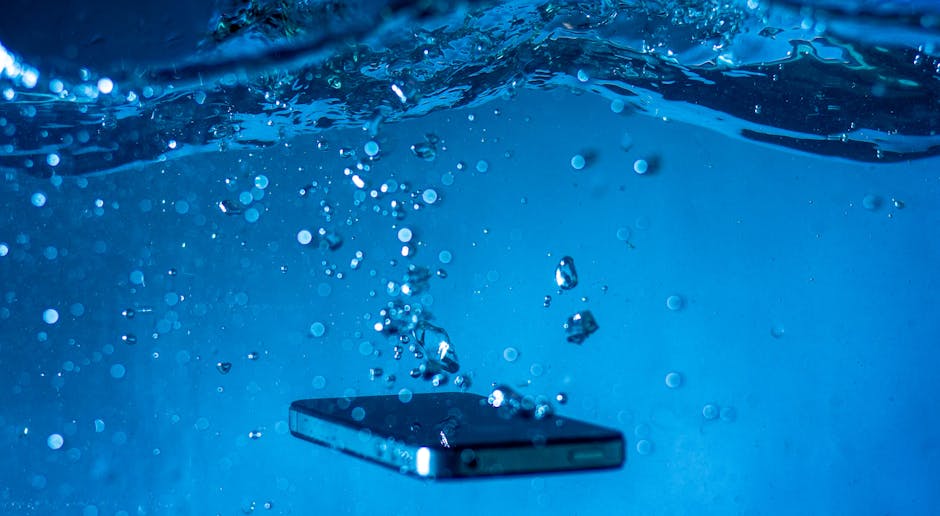
The first 90 minutes after a phone gets wet decide most of the outcome. What you do in that window matters more than how wet the phone got. Two identical accidents — same phone, same drop, same water — can end completely differently based on what happened in the first hour.
What's actually happening when a phone gets wet
Water itself isn't the problem — corrosion is.
When a phone gets wet, the water carries dissolved minerals onto the logic board. The water dries. The minerals don't. The minerals plus the small voltages running through the board plus ambient air equals a slow corrosion process that eats traces over hours, days, and weeks.
This is why a phone that "works fine" the day it got wet will often die two weeks later. The visible part — the wet phone — is almost the easier problem. The invisible part — corrosion that started forming the moment the water hit a powered board — is what kills devices later.
What to do, in order
- Power it off, immediately. Hold the side button. Even if the phone seems fine. Voltage running through wet circuits is what causes most water-damage failures. Off equals paused damage.
- Remove the SIM tray so the slot can air out.
- Wipe the outside thoroughly. Especially the ports, the speaker grilles, and the seam between the screen and the frame.
- Bring it to us. Ideally within 90 minutes. We open the device, neutralize what we can with isopropyl alcohol, ultrasonic-clean the board, and reassemble. A non-refundable diagnostic fee applies whether or not the device is recoverable.
That's the whole list. It's deliberately short. Shorter is better.
What NOT to do
Don't put it in rice. Rice doesn't pull water out of a sealed phone faster than air does. The phone-and-rice trick lets the corrosion process run unchecked while you wait. Years of practice and a lot of dead phones have settled this; the rice myth is wrong.
Don't use a hair dryer. Heat damages adhesives and accelerates corrosion in trapped water you can't see.
Don't try to charge it. Charging is the worst possible move — high voltage through wet contacts directly causes shorts that can take the logic board with them.
Don't power it back on to "check if it works." It might work for an hour, then die permanently overnight from corrosion you couldn't see at the time.
Why outcomes vary
Two phones that get equally wet can have completely different outcomes. The variables:
- How long the phone was on after getting wet. Off in 10 seconds versus off in 10 minutes is the difference between most-recoverable and least-recoverable.
- What was dissolved in the water. Salt water and pool water are far worse than rain. Coffee, juice, and beer are worse than tap water. The minerals and sugars stick around after the water evaporates.
- Whether the phone kept getting used. "I checked if it still worked" is the line we hear before "and now it's dead three days later."
- How quickly it was opened up. Corrosion happens with the device sealed; air-drying alone doesn't reach the logic board.
We've seen iPhones survive a 30-second drop in a pool because the owner powered down immediately and brought it in within an hour. We've also seen the opposite — a "fine" phone that died three days later because the owner didn't tell us it had been splashed.
When to bring it in
Within 90 minutes if at all possible. Within four hours if not. After that, the corrosion math gets worse fast, but it's not hopeless — we still try, and outcomes are case-by-case.
We'll give you an honest assessment after the diagnostic. If the board is too far gone, we'll tell you and refund any deposit minus the diagnostic fee. If it's recoverable, we'll quote the repair before doing the work. Walk in or call ahead — water-damage cases get prioritized at both locations.