
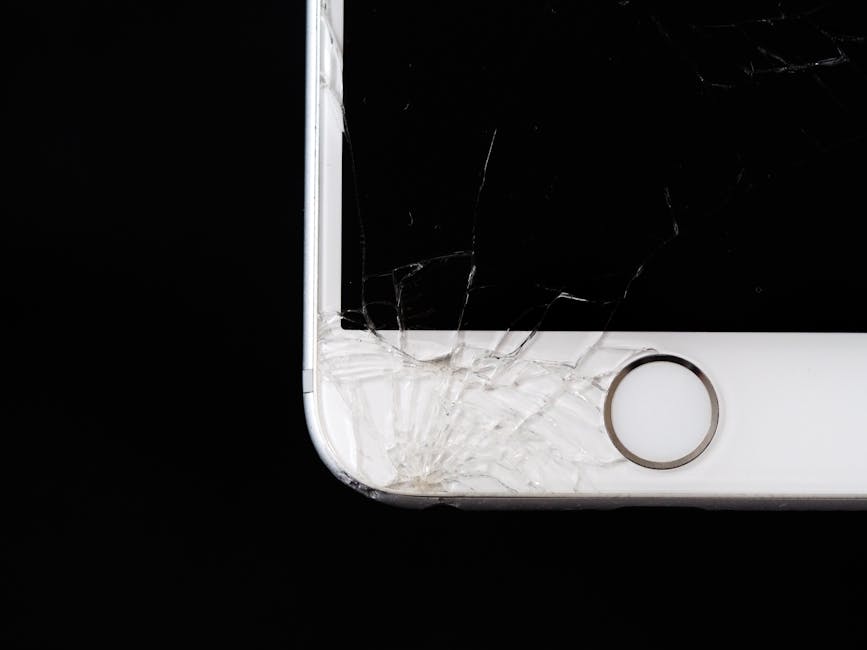
A customer walks in with a four-year-old iPhone, a cracked screen, and a battery that quits by mid-afternoon. The repair quote is $179. A new phone is $799. A trade-in offer is $130. They want a straight answer.
The answer almost always lives in three numbers and one honest question. Here's the framework we use when the call isn't obvious — feel free to use it before you walk in.
The 50% rule
If the repair costs more than half of what the device is actually worth on the open market, replace. Below half, repair.
The numerator is the repair quote. The denominator is resale value, not what the device cost new and not what the manufacturer's trade-in program offers (those are usually 40–60% of resale). Check eBay's "sold" listings for the same model in similar condition — that's the real number.
A 2022 iPhone with a $179 screen-and-battery combo and a $400 resale value? Repair. The same combo on a 2018 iPhone worth $90? Replace.
The 50% rule isn't about saving money on this one transaction — it's about avoiding a second repair on the same device six months from now. Devices that need one repair often need a second one within a year as other components age out together.
The multiple-issue test
How many things are wrong, and are more queued up?
One thing wrong on a healthy device — a cracked screen, a charging port, a battery — is a repair. Two things wrong on a three-year-old device is a coin flip. Three things wrong, or three things plus a battery that's already at 78% health, is a replacement.
The reason isn't the cost of fixing all three at once. It's that battery, screen, port, and speaker tend to fail in the same window. If you've already had two of the four go in the past six months, the other two are coming. Replacing them serially adds up to more than a new device.
The software-support deadline
A device whose manufacturer has stopped issuing security updates is worth less than its hardware suggests. iPhones get six to seven years of iOS updates. Pixel 8 and newer get seven years of OS and security updates. Galaxy S22 and S23 get four major Android versions plus five years of security; Galaxy S24 and newer get seven years of both OS upgrades and security updates (Samsung extended the commitment with the S24 launch in early 2024).
If your device is in its last year of supported updates, the resale-value denominator in the 50% rule drops fast. A perfectly working phone whose security updates end in nine months is worth maybe two-thirds of what it was worth a year earlier — even if nothing else has changed. Repair quotes look more expensive against that smaller number.
The honest question
What are you actually attached to — the device or the data?
If it's the data, repair-or-replace doesn't matter much. Both routes get your photos, contacts, messages, and apps onto the next device. Apple and Google both make this nearly seamless now. We can do device-to-device transfer here for $50 if you don't want to deal with cloud restores.
If it's the device — the physical thing, the case you've broken in, the keyboard you've finally gotten used to — that's a real reason to repair, and it's worth saying out loud. We're not going to talk you out of it. Just know you're paying a premium for continuity.
A few special cases
Water damage is a separate framework. The 50% rule doesn't apply because the outcome isn't certain — corrosion can compromise the logic board in ways that show up weeks later. We'll quote the diagnostic; you decide before we open it.
Logic-board failures on devices three years or older almost always lose to the 50% rule. Board-level repair is labor-intensive (the part is rarely the part) and the rest of the device is usually mid-life. The math gets ugly.
Storage-full or "the software is slow" is not a repair-or-replace question. It's a backup-and-erase question. Restoring a recent device to factory and reloading from a fresh iCloud or Google backup fixes 80% of "this phone got slow" complaints for free.
When it's worth bringing in
If the 50% rule says repair, the multiple-issue test says one issue, and the device still has more than 18 months of software support, walk in with confidence. Most common repairs (screens, batteries, charging ports) are 30 to 90 minutes while you wait, every repair is backed by our 90-day warranty, and walk-ins are welcome at both locations during business hours — no appointment needed.
If two of the three numbers point toward replace, the answer is usually replace, even if the third doesn't. Don't fight the math.
If you're not sure where your numbers land, the chat on this page can tell you what your specific repair would cost, and we can talk through your specific situation in 60 seconds.